
Last updated November 16, 2026
 AC repair
 Furnace & heating
 Heat pumps
 Ductless mini splits
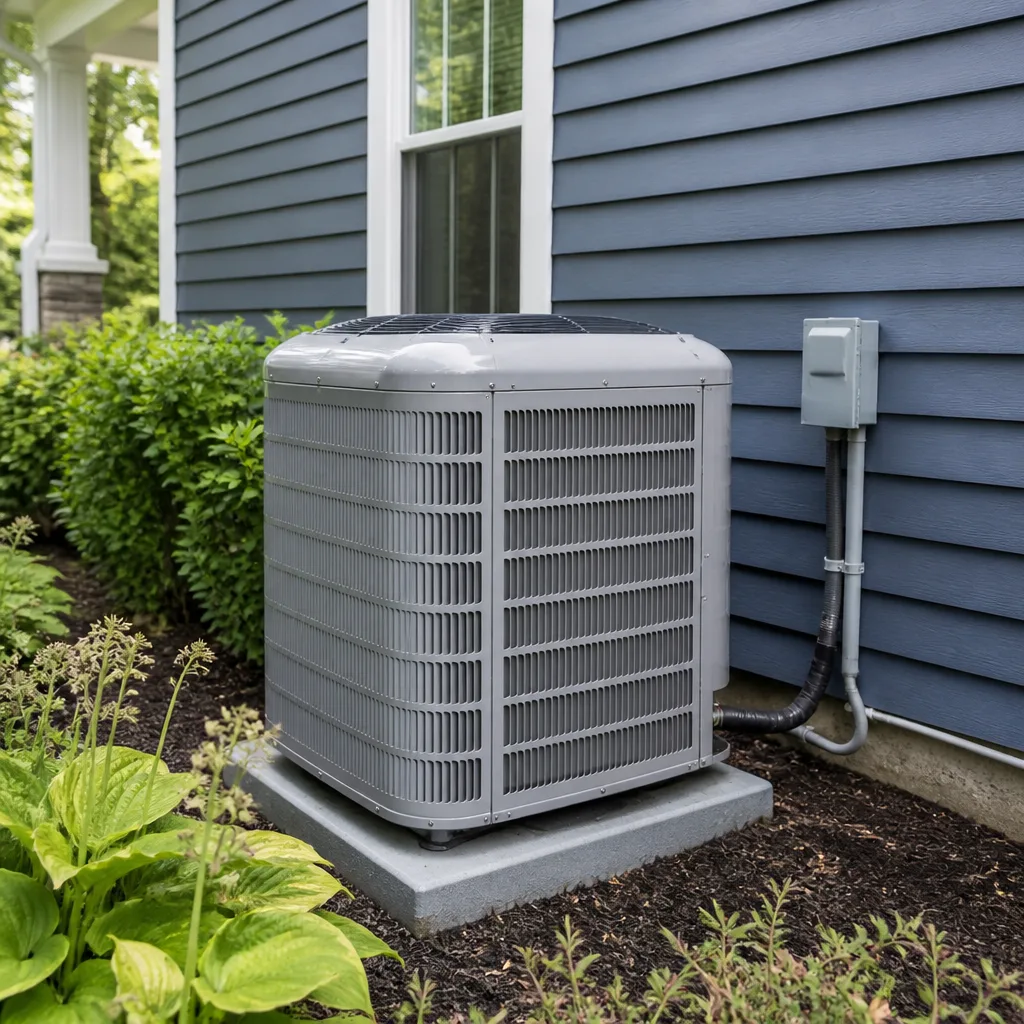 Carrier
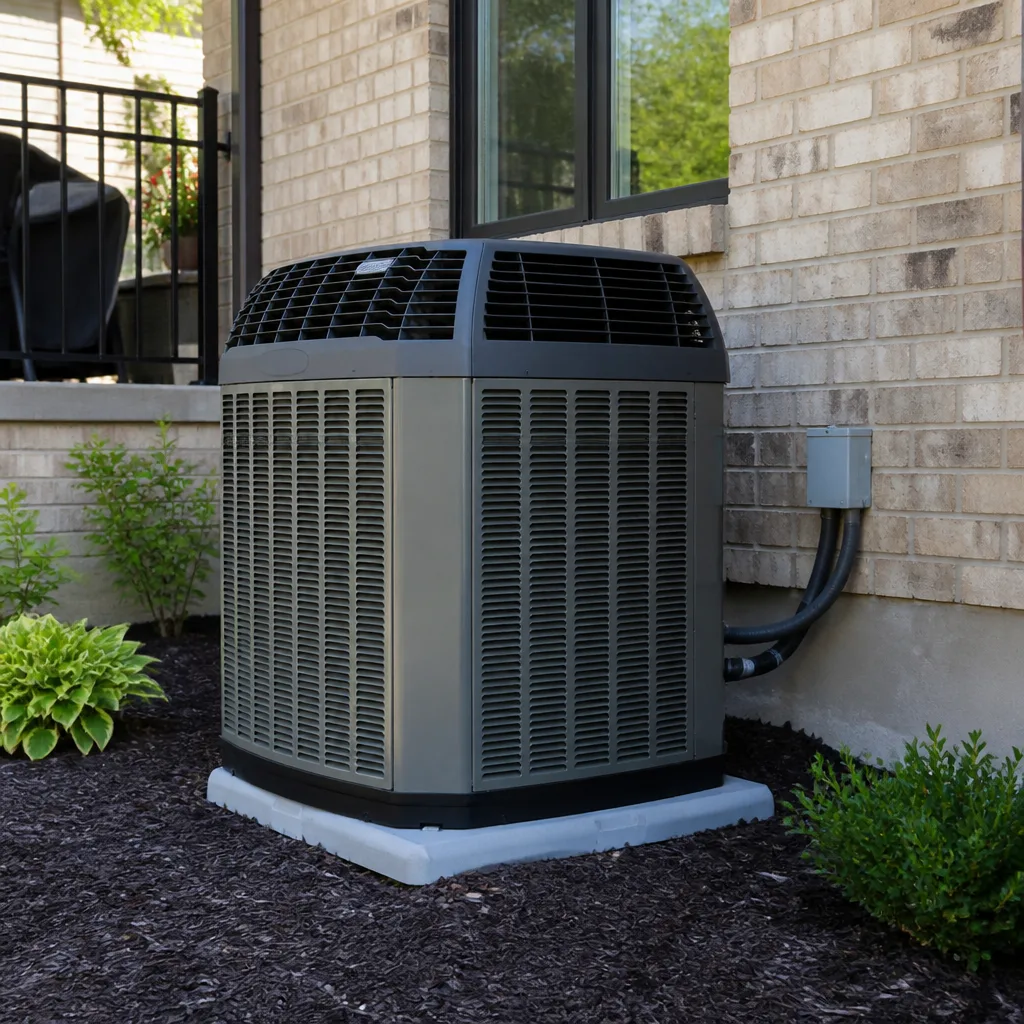 Trane
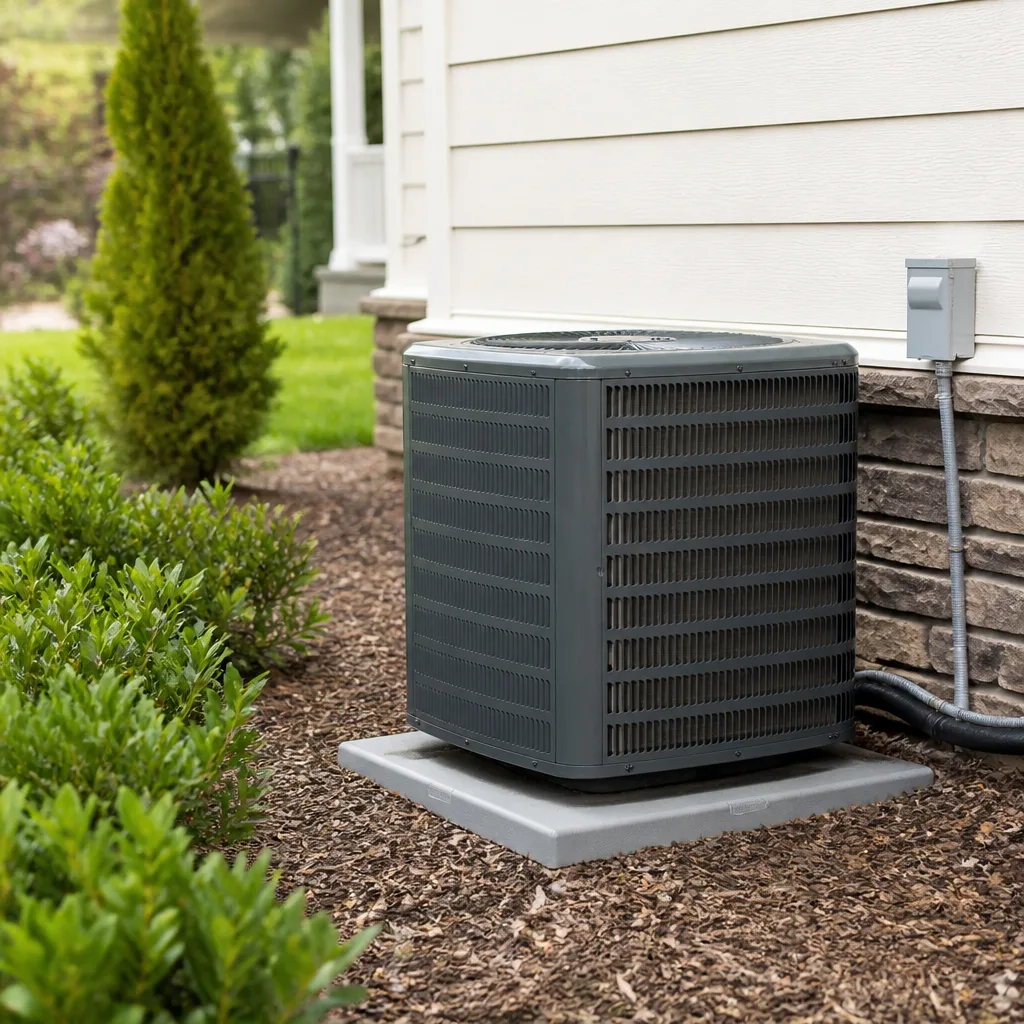 Goodman
Seasonal tune-up and full diagnostic on your Carrier, Trane, or Goodman system - readings shown to you before any repair is proposed
Diagnosis first, numbers second - you approve the repair price before a single part goes in.
Get your free estimateHow to Hire an HVAC Contractor in Burbank: A Step-by-Step Guide
If two HVAC quotes are more than 20% apart, the most likely explanation isn’t that one contractor is cheaper. It’s that they aren’t quoting the same job, and the cheaper scope will cost you more in year two. That’s the trap in the standard “get three quotes” advice: it assumes every contractor is bidding on the same work, and most aren’t. One bid includes a load calculation; another just matches the tonnage on your old nameplate. One pulls a permit; another quietly skips it. One prices a new line set; another reuses the old one. This guide walks you through a scripted, repeatable process for evaluating Burbank HVAC contractors on technical competence, not just price. You’ll learn what to verify before anyone knocks on your door, the exact questions that separate a real bid from a guess, and how to read a written scope of work line by line.
Quick Answer
To hire an HVAC contractor in Burbank, first verify four license credentials on the California State License Board (CSLB) database, then ask five technical questions that reveal whether the contractor does a real load calculation or just copies your old system’s size. Insist on a written scope of work before you sign, confirm who pulls the permit, and compare bids only when they cover identical line items. A contractor who can’t or won’t explain sizing, permitting, and warranty terms in writing is not a lower price. They’re an incomplete bid.
Styles & brands we work with
- AC repair
- Furnace & heating
- Heat pumps
- Ductless mini splits
- Carrier
- Trane
- Goodman
Table of Contents
- Before You Call: The Four Credentials to Verify
- The Five Technical Questions That Reveal a Real Contractor
- Why the Load Calculation Matters More Than the Brand Name
- What a Written Scope of Work Must Include
- Permits and Resale Disclosures in Burbank
- How to Read HVAC Reviews Without Getting Fooled
- Building an Apples-to-Apples Comparison
- Common Mistakes to Avoid
- When to Call a Professional
Before You Call: The Four Credentials to Verify
Do the paperwork before the estimate appointment, not after. California’s CSLB maintains a public database where you can check any licensed contractor in minutes. For HVAC work, four credentials matter, and you want all four confirmed before you let anyone measure your house.
1. A C-20 Warm-Air Heating, Ventilating, and Air-Conditioning License
California’s C-20 classification covers the installation and repair of warm-air heating, ventilating, and air-conditioning systems. Look for “C-20” specifically on the CSLB record – not a general B classification, which covers general building work but not HVAC specialty. A general contractor can sub the HVAC portion out, which is fine on a large remodel, but for a standalone AC or furnace project, a C-20 license is the credential to confirm.
2. Liability Insurance
The CSLB record won’t always show current liability coverage. Ask for a certificate of insurance directly. This covers damage to your home if something goes wrong – a dropped condenser, a refrigerant leak that damages finishes, a worker injured on your property. If a contractor can’t produce a current certificate quickly, that’s a warning sign about how they run their business.
3. Workers’ Compensation Coverage
If a technician is injured in your attic or on your roof, workers’ comp is what stands between you and a liability claim. Licensed contractors with employees are required to carry it. If the contractor is a sole proprietor with no employees, they may be legally exempt, and that’s a real conversation to have. What you don’t want is a contractor with employees and no coverage.
4. A Contractor’s Bond
California requires licensed contractors to carry a surety bond, and the CSLB will list whether it’s active. The bond is a backstop if the contractor walks off the job or fails to pay subcontractors or suppliers. If you order materials on the contractor’s account and they default, that bond can protect you from a mechanics lien on your home.
We’ve had homeowners call us after an install went sideways with an unlicensed operator, and the story is always the same: the price was great, the paperwork didn’t exist, and there’s no real recourse. Checking four items on a state website takes ten minutes and protects you for years. Our own technicians are experienced with the equipment they service – up to experience each – and we’d rather you check our credentials than take them on faith. We’re licensed and insured because that’s table stakes for this trade. When you’re ready, call AC Repair Burbank for a free estimate.
The Five Technical Questions That Reveal a Real Contractor
These five questions are designed to surface how a contractor thinks, not to trick anyone. A qualified HVAC professional answers them comfortably. A bidder who guesses at sizing or skips the technical detail will get flustered, change the subject, or give a vague answer that sounds reassuring but says nothing.
Question 1: “Will you do a Manual J load calculation before quoting a replacement?”
Manual J is the industry’s accepted method for calculating how much heating and cooling a specific home requires, based on square footage, insulation, window area and orientation, duct condition, and local climate data. Any competent contractor should do one for a full system replacement. If they say “we’ll just match what’s there,” that’s a red flag. The old system may have been oversized or undersized from day one.
Question 2: “How did you arrive at the tonnage you’re recommending?”
Listen for the term “ton” and for a specific method. “We always use a 3-ton for a house this size” is not a load calculation – it’s a rule of thumb. Rule-of-thumb sizing is how homes end up with short-cycling AC that never dehumidifies properly, or a furnace that heats too fast and creates hot and cold rooms.
Question 3: “Will you verify the static pressure and airflow on my existing ductwork?”
New equipment pushing through undersized or leaking ducts is a wasted investment. A contractor who checks static pressure and duct sizing is telling you they understand that the equipment and the ductwork are one system. If they don’t check, ask why not. Sometimes the answer is “because the ducts are clearly fine,” but a professional should be able to tell you how they know.
Question 4: “Who will pull the permit, and who is the permit under?”
The permit should be pulled by the licensed HVAC contractor and be in their name. A bid that says “permit not included” or “homeowner pulls” is a bid that may not pass inspection when you sell. We’ll cover the resale angle in a later section, but this question alone separates real bids from shortcut bids.
Question 5: “What’s the commissioning process after install?”
Commissioning means confirming the system does what it was designed to do: refrigerant charge, temperature rise across the furnace, airflow set, controls and thermostat verified. A contractor who plans to install and leave is selling parts, not a working system. Ask how they verify the install before they call it done.
If a technician answers all five with specifics, you’re probably dealing with a contractor worth considering. If two or three answers are vague, keep calling. Our technicians are factory-familiar with nine major brands – Carrier, Trane, Lennox, Goodman, Rheem, York, Daikin, Bryant, and American Standard – because we work on the system you already have, not just what we prefer to sell. That brand fluency shows up in conversations like this one.
Why the Load Calculation Matters More Than the Brand Name
Homeowners tend to fixate on brand when planning a replacement. Brand matters, but the load calculation matters more because it determines whether that brand’s equipment will actually work in your house. A premium name-brand unit that’s the wrong size will underperform a properly sized unit from a value brand every time.
Burbank sits in a climate where summers get hot and dry and winters stay mild. That specific mix matters for a load calculation. The cooling load here is driven largely by sun exposure – south- and west-facing windows and unshaded walls – and by the age of the housing stock. Much of Burbank’s residential housing was built decades ago, and many homes have added insulation, replaced windows, or converted a garage or sunroom without updating the HVAC system to match. That’s exactly why copying the old unit’s size is unreliable.
Ask to see the actual Manual J output. Not because you need to read it line by line, but because a contractor who can hand it to you did the work. A few things the report should show:
- Room-by-room heat gain and loss – not just a whole-house number
- Window and door details – glass type, area, orientation
- Insulation values – attic and wall, current state, not original build
- Duct location and condition – attic flex ducts are different from conditioned-space ducts
- A recommended equipment size range – a real calculation gives a range, not a hard number
If you’re weighing a repair against a replacement, the load calculation is often what settles the question. A system that’s tripping the high-pressure safety in July may be undersized for the home – no amount of repair fixes that. If it’s properly sized and just old, a furnace repair or an AC repair may be the right call for a few more years.
What a Written Scope of Work Must Include
The written scope of work is the document that protects you when something goes wrong nine months after installation. It should be specific enough that a judge or a mediator could read it and understand exactly what was promised. If the bid you receive is one page with a lump-sum price and a brand name, ask for more detail. Any contractor worth hiring can produce it.
What a proper scope must include
- Equipment by model number. Not just “3-ton Carrier AC” – the full model number, including the outdoor unit and the indoor air handler or coil. Model numbers determine efficiency ratings, warranty terms, and compatibility.
- Full SEER or AFUE rating. The efficiency specification must match the equipment ordered. If the bid says “high-efficiency” without a number, ask for the number.
- Line set replacement or reuse, stated clearly. “Existing line set reused” means it will be, and that’s usually fine on a short run with a compatible refrigerant. But “reused” in a bid for a system changing refrigerant type is a problem. Get it in writing either way.
- Refrigerant type and charge. R-410A, R-32, or R-454B, whichever the equipment uses. The charge method (weigh-in vs. superheat/subcool verification) should be stated.
- Electrical work and disconnect. New equipment often requires a new disconnect and sometimes a new circuit. If the panel can’t support it, that’s a change order waiting to happen.
- Duct modifications, if any. If ducts are being modified to accommodate new equipment or correct a sizing issue, that needs to be listed and priced.
- Thermostat and controls. Included or not, and which model if included.
- Permit and inspection fees. Itemized or explicitly included in the lump sum.
- Warranty terms. Manufacturer warranty length, labor warranty length, and whether the warranty is contingent on maintenance that isn’t being quoted.
- Commissioning and cleanup. What’s tested, what’s left behind, and whether the old equipment is hauled away.
The three line items most often omitted
- Disposal of the old equipment. If it isn’t listed, either it’s assumed (which becomes a change order) or the contractor plans to leave it in your side yard.
- Duct sealing at the plenum. Older systems often leak badly right at the plenum – the box where the indoor unit sits. A contractor who doesn’t include plenum sealing is skipping a common source of inefficiency.
- Condensate management. A new drain pan, safety switch, or line routing to code. These are small line items that prevent calls back in the summer. If they’re not in the scope, they’ll show up as change orders.
We include all of these in every written scope because we’ve seen what happens when they’re not in the bid. When the scope is clear, the price stops moving. We offer free estimates in Burbank and our scope documents are the same ones our own technicians install from. Our work covers the full equipment lifecycle, from AC installation to furnace replacement, which means the same scope document has to be complete whether we’re installing, repairing, or replacing.
Permits and Resale Disclosures in Burbank
A permit is more than a fee. It’s the record that shows the work was done to code and inspected by a third party. In Burbank, HVAC permits go through the city’s building department, and in a resale the permit history is one of the first things a buyer’s agent will check. An unpermitted replacement can become a negotiating point, a delayed close, or in some cases a requirement to open up walls and retrofit the code-required items – all at the seller’s cost.
What a permit-pulling contractor does that a skipping contractor doesn’t:
- Submits the installation scope to the city before the work begins
- Schedules an inspection after the install
- Corrects any discrepancies the inspector finds, at their cost if they installed
- Leaves a permit record with the city that a future buyer can pull
The permitting process also protects you in ways that aren’t immediately obvious. The building department reviews the proposed equipment against the existing electrical panel, the location of the unit, and the ductwork, and flags anything that won’t pass. A contractor skipping the permit skips that review. Years later, that skipped review becomes a code violation at resale time.
Burbank isn’t an outlier here – most California cities run a permit-and-inspection process for HVAC replacements. But Burbank’s older housing stock and its share of additions and conversions mean the inspector’s checklist can matter more than it does in a newer city where every install is the same. If a contractor tells you “you don’t need a permit for a swap,” ask them to put that in the written scope. If they won’t, call another contractor. The response is usually that the contractor is dodging the fee, not informing you of a real exemption.
How to Read HVAC Reviews Without Getting Fooled
Online reviews are useful, but not in the way homeowners usually use them. The star count tells you very little. What matters is the pattern of the reviews – who’s writing them, what they mention, and whether the language sounds like a homeowner who just had a system installed or a marketing team that found some adjectives they liked.
Signals of genuine technical reviews
- Specific equipment mentions. A genuine review often names the brand or model installed, because the homeowner had to learn it during the process. “They installed a Goodman unit and walked me through the warranty” reads differently from “Great service, very professional.”
- Timelines and details. “Came out the next morning, diagnosed a bad capacitor, replaced it and checked the refrigerant before leaving” – specific steps, specific problem.
- Mixed reviews from the same reviewer. A real review sometimes mentions a small issue and a positive outcome. That’s what real service interactions look like. Perfection across many reviews is a red flag.
- Reviews that mention specific technicians. Even without names, “the tech who came out ran through the readings with me” is a detail a marketing writer rarely invents.
Signals of fake or inflated reviews
- Bursts of 5-star reviews in a short window. A sudden cluster of identical praise often means a review drive, not organic satisfaction.
- Reviews that mention no specific equipment, no specific problem, no specific technician. Generic praise from a user with a single review is worth reading skeptically.
- Reviews that contradict the business’s actual services. If a “reviewer” praises the contractor for a water heater install and the business doesn’t do water heaters, that review isn’t reliable.
- Over-emotional or promotional language. “The absolute best in town, they saved my life” reads differently from “They found the problem, got the part, and were done in an hour.”
Read the middle-star reviews most carefully. They’re the ones probably written by real homeowners with real reactions, and they’ll tell you what tends to go wrong – scheduling, communication, follow-up on a warranty claim – which is what you actually need to know.
One more check that’s specific to Burbank: HVAC contractors working in the older neighborhoods – the Magnolia Park area, Rancho Equestrian, the neighborhoods around downtown – deal with a wide range of ductwork conditions and roof access issues. Reviews that mention how a contractor handled a difficult attic or a tricky roof access are more useful than reviews that just praise the price. We specialize in heating and cooling only, not a multi-trade operation, because splitting focus across plumbing and roofing is exactly how the technical detail gets skipped.
Building an Apples-to-Apples Comparison
Once you have two or three written scopes in hand, comparison becomes a line-item exercise, not a gut decision. The rule of thumb: if two bids differ by more than 20%, find the line items that explain the gap before you decide.
- Normalize the equipment. Same model or comparable tier, so you’re comparing installation quality rather than equipment cost.
- Line up the scope side by side. Every scope item in one column, every scope item in the other, and mark where they don’t match. Missing line items are where the price gap lives.
- Ask each contractor to explain any gap in writing. A well-run bid explains itself. A vague answer on a written question is an answer you’ll want to weigh.
- Check the warranty terms against the scope. If the manufacturer’s warranty requires an annual maintenance record and the bid doesn’t include one, that’s a hidden annual cost. That’s not a dealbreaker – but it should be on the same page when you decide.
- Ask who’s actually doing the install. Employees or subcontractors matters because you’re evaluating the work, not just the sales process. Whoever shows up should be credentialed to work on your system.
When the numbers differ by more than 20%, don’t rush to the lower bid. Ask each contractor which scope items are included and get it in writing. Often the gap is a piece of the job one contractor is assuming – permit, disconnect, plenum sealing, disposal – and once it’s added, the bids land close to each other. That’s the test: after equalizing, whichever bid remains both complete and competitive is the one worth considering. Brand-agnostic service means we’re not pushing a specific manufacturer into your comparison. Whether your home already has a Lennox, a Rheem, or a Daikin unit installed, we’ll evaluate what’s there and tell you what the job actually needs.
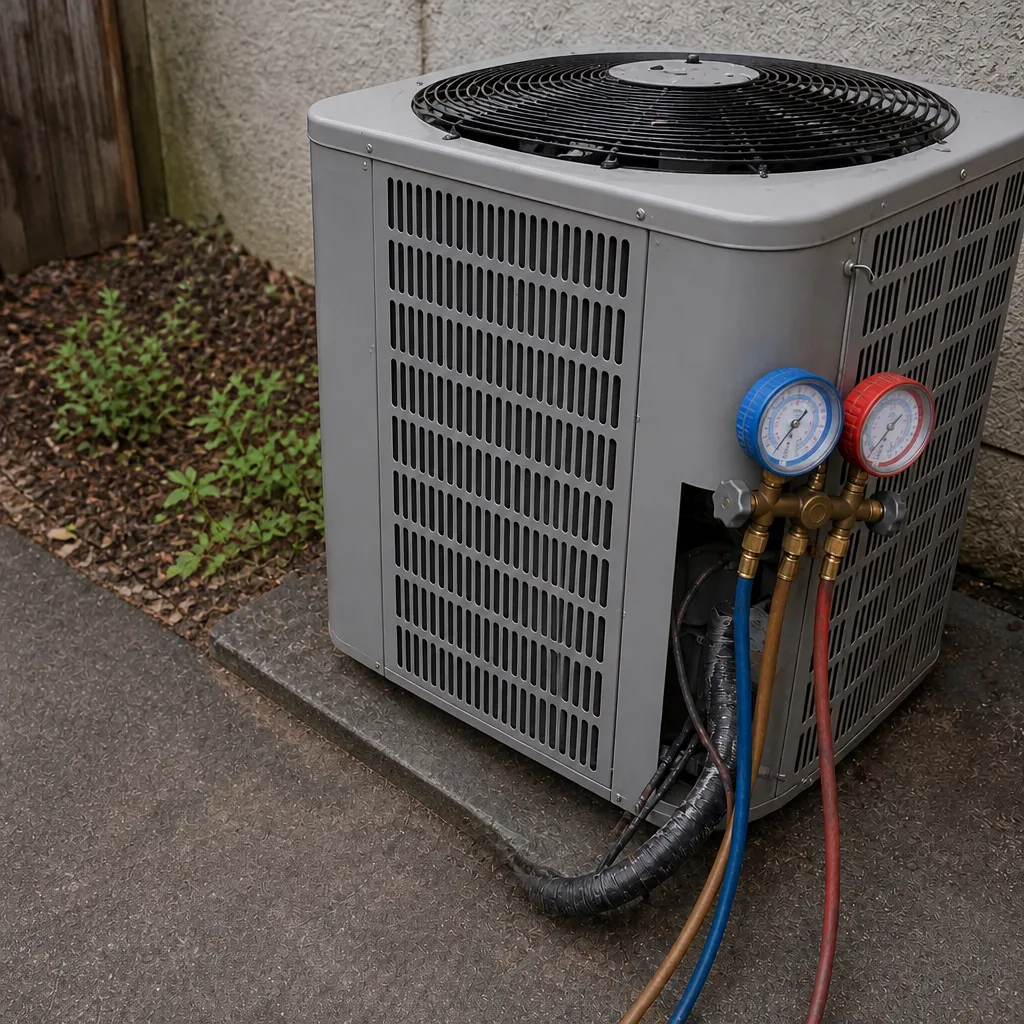
See the difference
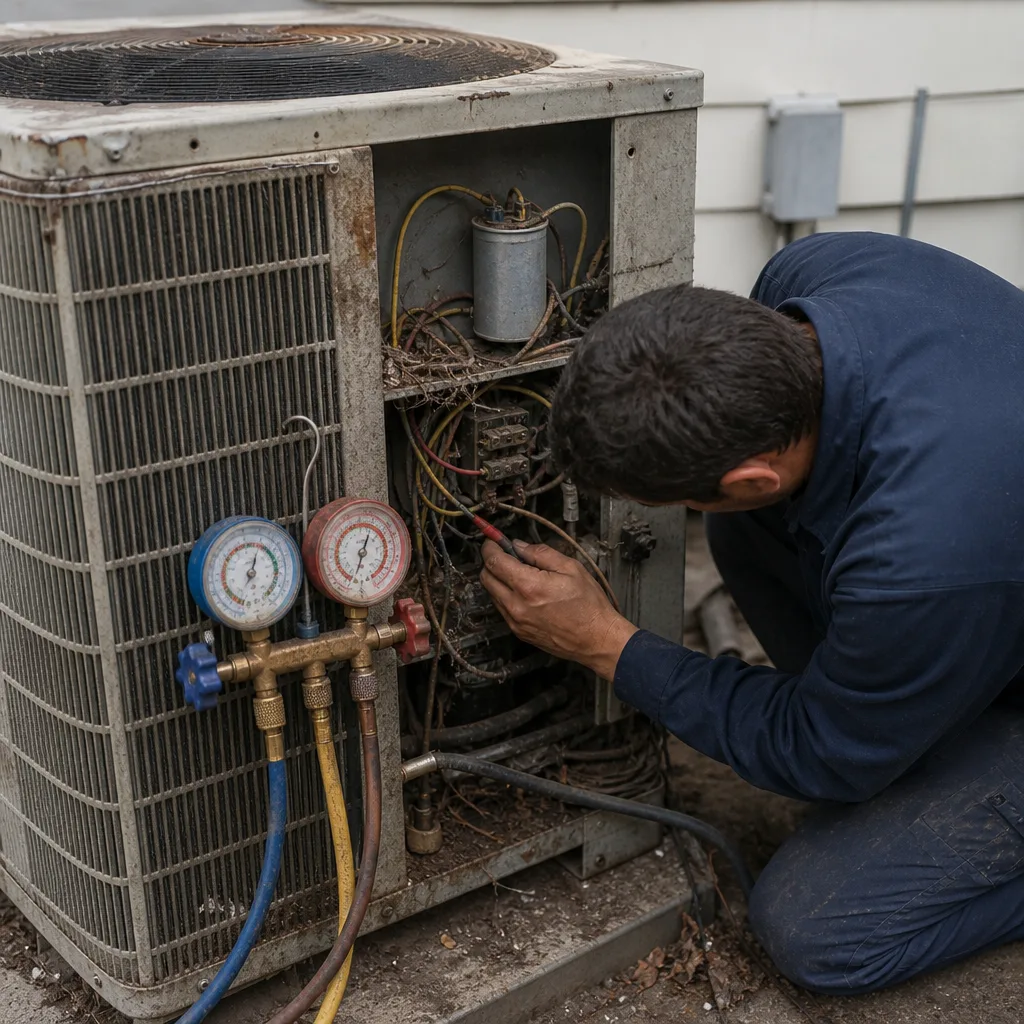 Before
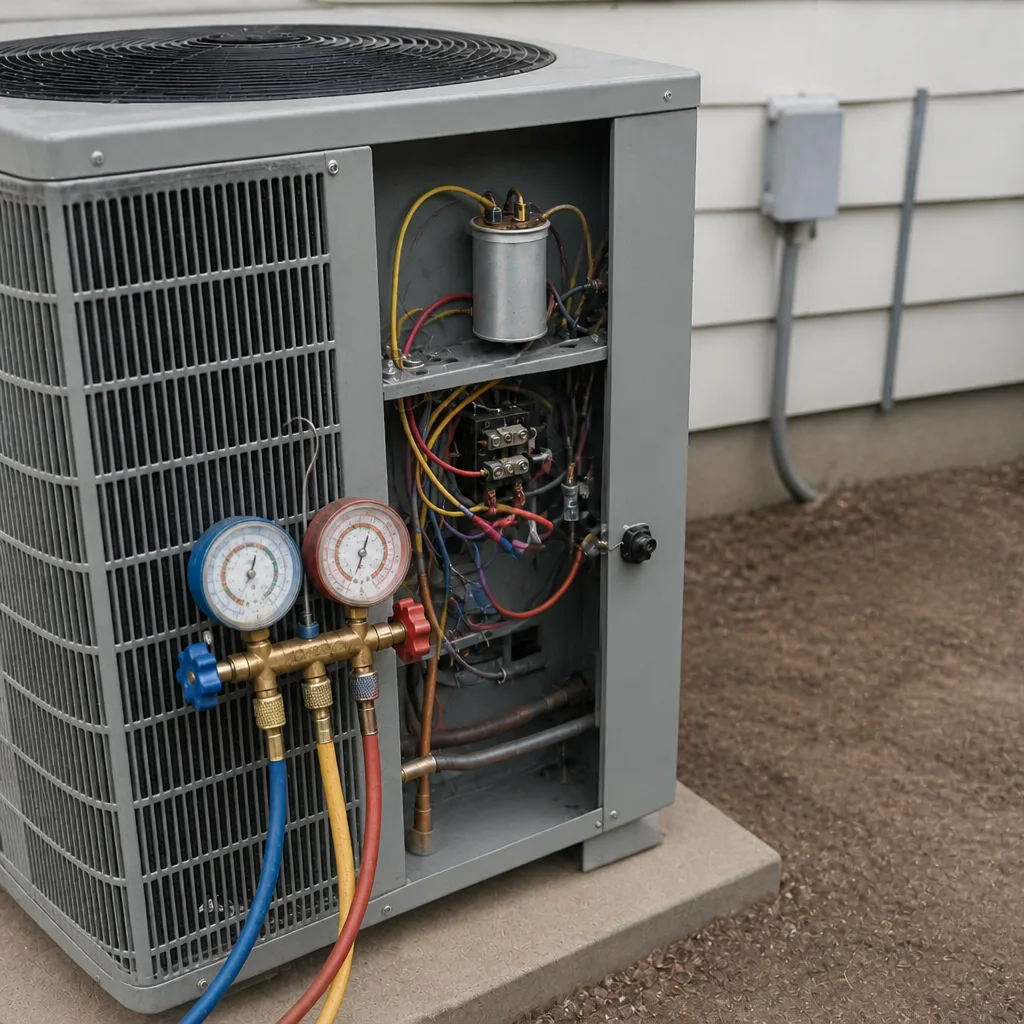 After
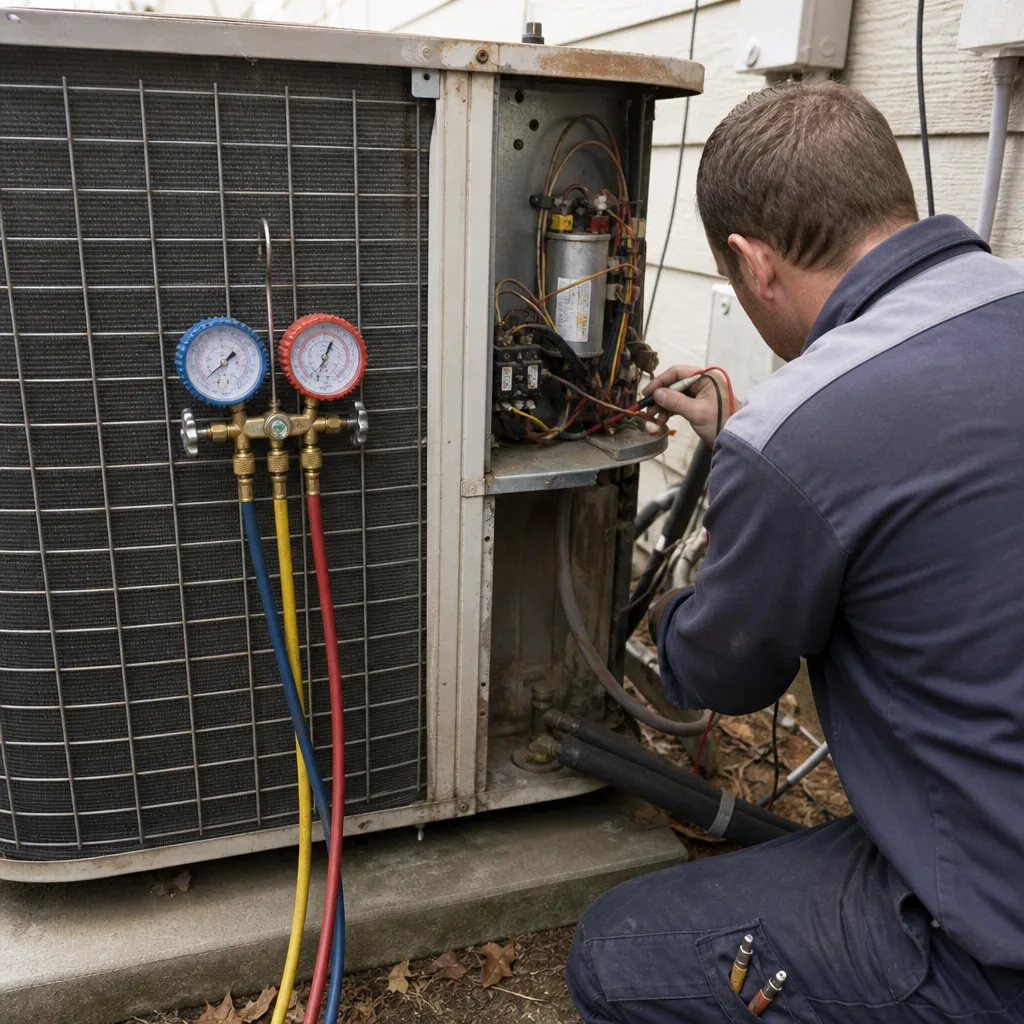 Before
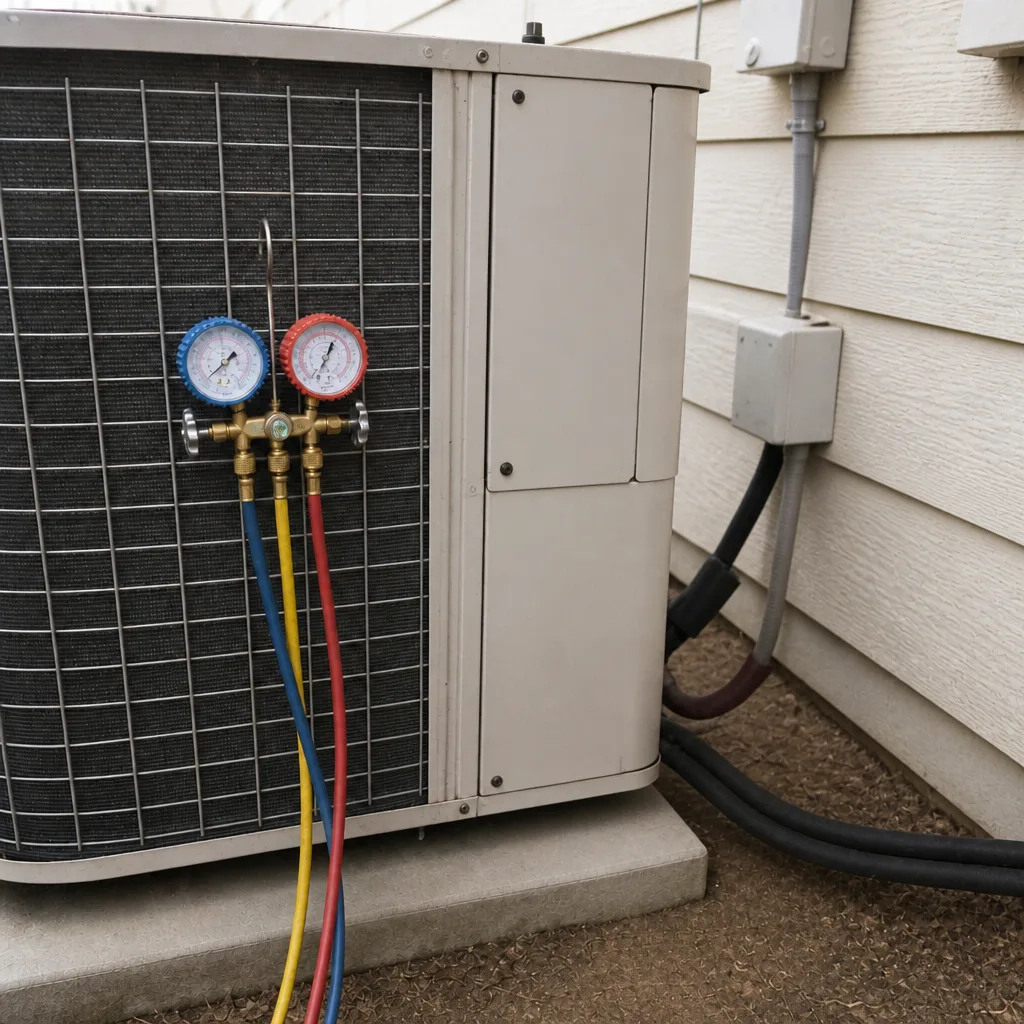 After
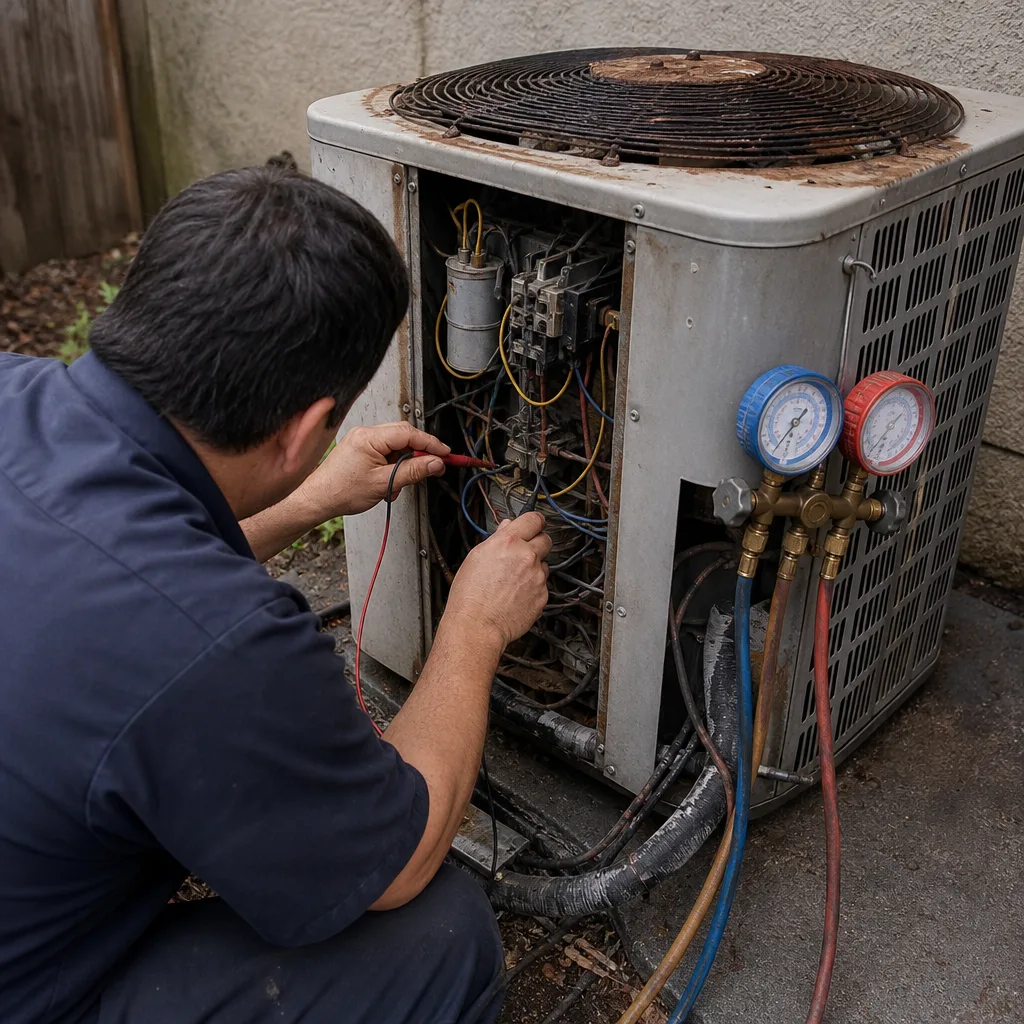 Before
 After
Common Mistakes to Avoid
- Accepting a verbal quote. Callback promises vanish, and disagreements about size, equipment, or scope have nothing to reference. Every bid you’re comparing should be in writing with model numbers and line items.
- Skipping the CSLB check. It takes minutes. Homeowners who skip it are the ones who discover a license issue after the install is already done, when the fix is expensive.
- Choosing on price alone. The cheaper scope generally costs more in year two – in change orders, missed permit inspections, or a system that’s the wrong size and runs inefficiently from day one.
- Not asking about the load calculation. This is the single most common shortcut. If a contractor matches existing equipment size without calculating, they’re making an educated guess about your home.
- Skipping the parent permit. Unpermitted work is a problem at resale in Burbank, and it removes the inspection layer that protects you from shoddy work.
- Comparing reviews by star count instead of content. A 4.9 average with generic praise is worth less than a 4.7 average with specific equipment and problem details from real homeowners.
- Not writing down the warranty in the scope. Manufacturer warranties, labor warranties, and maintenance requirements are three different documents. Get them all in the bid and read them side by side before signing.
When to Call a Professional
Some HVAC problems are genuinely urgent and some can wait for a scheduled visit. The distinction matters for how you spend your time and money. Call an HVAC professional immediately when you smell gas, when the system’s breaker trips repeatedly, when the AC stops cooling on a hot day, or when a furnace stops producing heat in cold weather. Electrical and gas issues are not weekend projects, and a technician with the right training and diagnostic tools will find the cause faster and more safely than any homeowner can.
Call for a scheduled visit when you notice efficiency drift – higher bills for the same usage, temperature swings from room to room, or a system running longer than usual. These are early signals where a small repair or a cleaning makes a real difference. And call when you’re planning a replacement: getting the paperwork, the load calculation, and the scope done right takes planning, not urgency.
AC Repair Burbank offers free estimates in Burbank – call (844) 962-2046. We answer 24/7. Fast dispatch from 7am to 7pm, Sunday through Friday. Whether the system needs a repair or a full replacement, we’ll tell you which one actually makes sense. If you’re in the middle of the hiring process, our Burbank service region covers the whole city, and our AC installation team is the group to ask about the technical questions in this guide.
Frequently Asked Questions
Yes – the C-20 (Warm-Air Heating, Ventilating, and Air-Conditioning) license is the classification the CSLB issues for HVAC specialty work in California, and it’s the credential to verify on the state database before you sign anything. A general B license covers general building work but not HVAC specialty work on its own. Ask any contractor for their C-20 license number and verify it on the CSLB site before the estimate appointment. If they can’t supply it, call someone else. Call (844) 962-2046 for a free estimate from AC Repair Burbank.
We don’t quote pricing by phone because the honest answer depends on the load calculation, the current ductwork, and the equipment tier you choose. A written estimate is the only accurate figure, and it should be based on a Manual J calculation and a full scope of work, not a rule of thumb. The scope review process in this guide is designed to make sure the bid you receive includes the items that actually determine cost. Call (844) 962-2046 for a free estimate and a detailed written scope.
A permit-pulling contractor submits the installation scope to Burbank’s building department for review, schedules an inspection, and leaves a permit record with the city. A non-permitting contractor skips that process, and the consequences show up at resale. The permit record is one of the first things a buyer’s agent checks, and unpermitted work can become a price negotiation or a required retrofit. Ask upfront whether the permit is included and in whose name it will be pulled. If a contractor says you don’t need one, ask them to put that in writing – most can’t. Call (844) 962-2046 for a free estimate and a written scope.
The answer depends on three things: the system’s age, the repair cost relative to a replacement, and whether the system is correctly sized for your house. If the system is old and undersized, a repair is a limited investment. If it’s a properly sized system with a single failure, a repair usually makes sense. A load calculation settles the question – if the existing equipment is the wrong size, that changes the calculus even if the repair is small. We’ll tell you which direction makes sense after diagnosing the system. Call (844) 962-2046 for a free estimate.
Ask for the Manual J output. A proper load calculation produces a report showing room-by-room heat gain and loss, window and door details, insulation values, duct location, and a recommended equipment size range. A contractor willing to hand over that report did the work. A contractor who quotes “3 tons because that’s what’s there now” didn’t. The report isn’t a formality – it’s the document that determines whether your new system performs in Burbank’s climate. Call (844) 962-2046 for a free estimate.
Look for specific content, not star counts. Genuine reviews tend to mention equipment brands, specific problems, timelines, or technical details, because homeowners who just went through an installation or repair learned those details during the process. Bursts of generic 5-star reviews are a warning sign. Read the middle-star reviews most closely, since they tend to mention what went wrong – scheduling, follow-up, warranty handling – which is the information you actually need. The review data on file for AC Repair Burbank reflects the feedback of real Burbank homeowners; call (844) 962-2046 for a free estimate.
The Bottom Line
Hiring an HVAC contractor in Burbank is a due-diligence exercise, not a price-shopping exercise. Verify the four CSLB credentials before anyone visits. Ask the five technical questions, and listen for whether the contractor does a real load calculation or matches existing equipment size. Insist on a written scope of work with model numbers and line items, and confirm the permit will be pulled and in the contractor’s name. Read the scope, not the star count. When two bids differ by more than 20%, find the line items that explain the gap. A complete bid at a higher price is cheaper than an incomplete bid at a lower one – every time. That’s the test that actually protects you.
If you want a written scope that includes every line item covered in this guide, AC Repair Burbank offers free estimates throughout Burbank. Furnace repair and AC installation are our two main services, and both come with the same documentation standard. Call (844) 962-2046. We answer 24/7. Fast dispatch from 7am to 7pm, Sunday through Friday. Closed Saturday.
Written by the team at AC Repair Burbank.